

Essential Tests During Pregnancy: A Complete Guide for Expecting Mothers
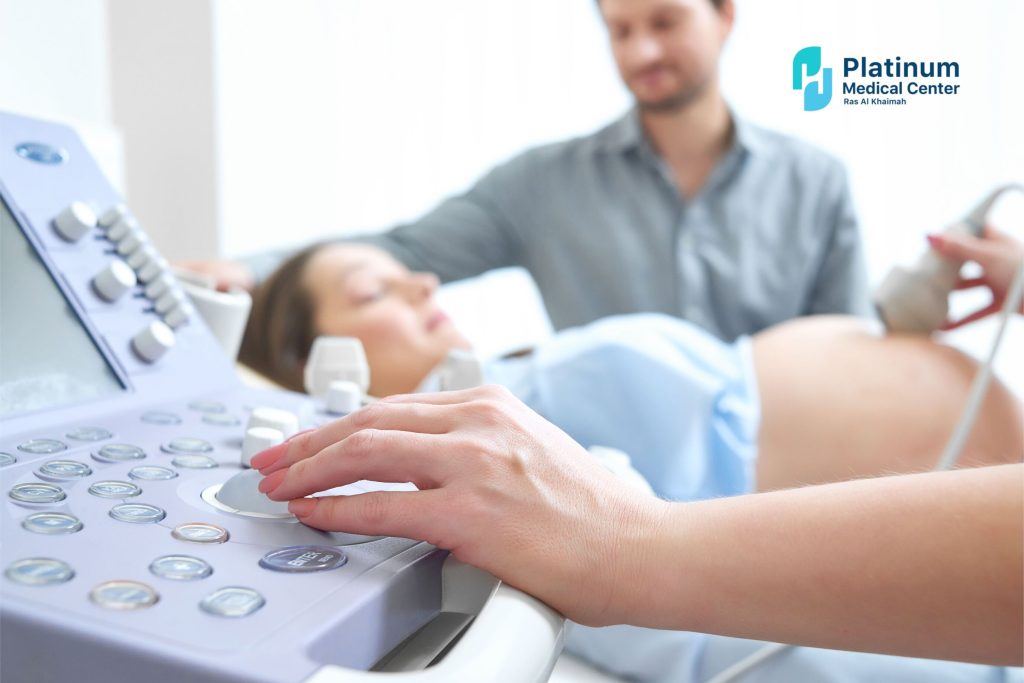
Pregnancy is a beautiful journey, but it also requires careful medical monitoring to ensure the health and safety of both mother and baby. Regular prenatal tests help detect potential complications early, monitor baby’s growth, and provide peace of mind throughout each trimester.
At Platinum Medical Center, we emphasize comprehensive prenatal screening as part of safe and patient-centered maternity care in Ras Al Khaimah.
This guide explains the essential tests during pregnancy, why they matter, and when they are typically recommended.
Why Are Pregnancy Tests Important?
Pregnancy tests and screenings help to:
- Monitor the baby’s growth and development
- Detect genetic or chromosomal conditions
- Identify maternal health risks (diabetes, hypertension, anemia, infections)
- Prevent pregnancy complications
- Ensure safe delivery planning
Early detection means better management and healthier outcomes.
First Trimester Tests (Weeks 1–13)
The first trimester is crucial for confirming pregnancy and establishing a baseline of maternal health.
1. Blood Tests
Blood tests are usually performed during the first prenatal visit. They help determine:
- Blood group and Rh factor
- Hemoglobin levels (to detect anemia)
- Thyroid function
- Blood sugar levels
- Screening for infections such as hepatitis B, HIV, HCV, and syphilis
These tests ensure that both mother and baby are protected from preventable risks.
2. Urine Analysis
A urine test checks for:
- Urinary tract infections
- Protein levels (early sign of preeclampsia)
- Sugar levels
UTIs are common during pregnancy and must be treated promptly.
3. Early Ultrasound Scan
An early ultrasound confirms:
- Fetal heartbeat
- Gestational age
- Number of embryos (single or twins)
- Ectopic pregnancy exclusion
This scan provides reassurance and accurate due date estimation.
4. First Trimester Screening (11–13 Weeks 6 Days)
This includes:
- Nuchal translucency (NT) scan
- Combined blood test
This screening evaluates the likelihood of chromosomal abnormalities, including conditions like Down syndrome.
Second Trimester Tests (Weeks 14–27)
The second trimester focuses on detailed fetal development and maternal health monitoring.
5. Anomaly Scan (18–22 Weeks)
Also known as the detailed morphology scan, this ultrasound examines:
- Baby’s organs and brain development
- Spine and limbs
- Placenta position
- Amniotic fluid levels
It is one of the most important scans during pregnancy.
6. Glucose Tolerance Test (24–28 Weeks)
This test checks for gestational diabetes.
Uncontrolled blood sugar can lead to complications like:
- Large birth weight
- Premature delivery
- Delivery complications
Early management ensures a healthy pregnancy.
7. Quadruple Marker Test (If Advised)
In some cases, a quad test may be recommended to assess the risk of genetic abnormalities.
Third Trimester Tests (Weeks 28–40)
The third trimester ensures that both mother and baby are ready for delivery.
8. Growth Scan
This ultrasound monitors:
- Baby’s weight and growth
- Amniotic fluid levels
- Placental health
It ensures the baby is developing properly.
Hemoglobin, blood sugar, and urine analysis will be repeated in the third trimester.
9. Group B Streptococcus (GBS) Test (35–37 Weeks)
This swab test checks for bacteria that could pass to the baby during delivery. If positive, antibiotics during labor prevent infection.
10. Non-Stress Test (If Required)
This test monitors the baby’s heart rate and movement in high-risk pregnancies.
Additional Tests Based on Medical History
Some women may require additional tests depending on:
- High blood pressure
- Thyroid disorders
- Previous pregnancy complications
- Advanced maternal age
- Family history of genetic conditions
Your doctor will recommend personalized screenings accordingly.
How to Prepare for Pregnancy Tests
- Attend all scheduled prenatal appointments
- Maintain a healthy diet
- Stay hydrated
- Inform your doctor about any symptoms
- Follow fasting instructions (if required for glucose testing)
Consistent monitoring improves pregnancy outcomes significantly.
Where to Get Safe Prenatal Testing in Ras Al Khaimah?
If you are looking for trusted maternity care and essential pregnancy screening services, Platinum Medical Center offers:
- Comprehensive prenatal checkups
- Advanced ultrasound facilities
- Experienced obstetric team
- Patient-focused care in a comfortable environment
Early and regular testing ensures a smooth and healthy pregnancy journey.
Conclusion
Essential pregnancy tests are not just routine procedures — they are powerful tools that protect both mother and baby throughout the journey. From early blood work to detailed anomaly scans and third-trimester monitoring, each test plays a vital role in ensuring a safe and healthy delivery.
Regular prenatal care provides reassurance, early detection, and expert guidance — helping you embrace motherhood with confidence and peace of mind.
Recent Blogs
- IV Vitamin Therapy: What You Should Know Before Your First Session
- Post-Pregnancy Care for New Mothers: A Complete Guide to Recovery After Childbirth
- Childhood Vaccination Schedule in UAE: A Parent’s Complete Guide
- Iron Deficiency in Women: Signs You Shouldn’t Ignore
- Growth & Development Milestones Every Parent Should Know
- Common Gynecological Problems Women Should Not Ignore
- Early Signs Your Body Is Asking for a Health Checkup
- Essential Tests During Pregnancy: A Complete Guide for Expecting Mothers
- Common Health Problems in the UAE & How to Prevent Them
- Women’s Health: Understanding Hormonal Changes

