

Common Gynecological Problems Women Should Not Ignore

Women’s health is an essential part of overall well-being, yet many gynecological symptoms are often ignored or delayed due to busy lifestyles, lack of awareness, or hesitation to seek medical advice. However, early detection and timely care can prevent minor concerns from developing into serious health conditions.
Common gynecological problems women should not ignore include issues related to menstrual health, hormonal imbalance, infections, reproductive health, and chronic conditions such as polycystic ovary syndrome (PCOS) and fibroids. These conditions can affect women of all ages and may impact fertility, daily comfort, and long-term health.
In the UAE, factors such as stress, lifestyle habits, dietary patterns, and hormonal changes contribute to the increasing prevalence of gynecological conditions. Understanding the warning signs and seeking early medical care is key to maintaining reproductive health and overall wellness.
Why Gynecological Health Should Never Be Ignored
Gynecological health is closely connected to hormonal balance, reproductive function, and overall physical and emotional well-being. Ignoring symptoms such as irregular periods, pelvic pain, or unusual discharge can lead to complications if left untreated.
Regular gynecological checkups help:
- Detect infections early
- Identify hormonal imbalances
- Monitor reproductive health
- Prevent long-term complications
- Support fertility and pregnancy planning
Early medical consultation ensures timely diagnosis and appropriate treatment.
Common Gynecological Problems Women Should Not Ignore
1. Irregular Menstrual Cycles
Irregular periods are one of the most common gynecological concerns among women. While occasional variation is normal, frequent irregularity may indicate underlying hormonal imbalance or medical conditions.
Symptoms may include missed periods, unusually heavy bleeding, or cycles that are too short or too long. Common causes include stress, thyroid disorders, PCOS, and lifestyle factors.
If menstrual irregularities persist for several months, a gynecological evaluation is recommended.
2. Polycystic Ovary Syndrome (PCOS)
PCOS is a hormonal disorder that affects many women in the UAE. It occurs when the ovaries produce excess androgens, leading to irregular ovulation.
Common symptoms include:
- Irregular or absent periods
- Weight gain
- Acne
- Excess hair growth
- Difficulty conceiving
Early diagnosis and lifestyle management can help control symptoms and reduce long-term risks such as diabetes and infertility.
3. Vaginal Infections
Vaginal infections are common but should never be ignored. They can cause significant discomfort and may lead to complications if left untreated.
Common types include:
- Candidal infections (Candidiasis):
Caused by overgrowth of Candida species, leading to itching, thick white discharge, and irritation. - Bacterial Vaginosis:
Caused by an imbalance of normal vaginal flora, often resulting in thin, greyish discharge with a characteristic odor. - Trichomoniasis (Trichomonas vaginalis):
A sexually transmitted infection caused by a protozoan parasite, leading to frothy discharge, itching, and discomfort.
Common symptoms include:
- Vaginal itching or irritation
- Burning sensation (especially during urination)
- Unusual vaginal discharge
- Foul or unusual odor
Prompt diagnosis and appropriate treatment are important to relieve symptoms, prevent recurrence, and avoid complications.
4. Pelvic Pain
Persistent pelvic pain is not normal and should always be evaluated. It may be related to the reproductive organs or other underlying conditions.
Possible causes include:
- Endometriosis
- Ovarian cysts
- Fibroids
- Pelvic Inflammatory Disease (PID)
Pelvic Inflammatory Disease (PID):
PID is an infection of the female reproductive organs, usually caused by bacteria. If not treated properly, it can lead to chronic pelvic pain, infertility, and other serious complications.
Chronic pelvic pain can significantly affect quality of life and may indicate underlying conditions that require timely medical attention.
5. Uterine Fibroids
Fibroids are non-cancerous growths in the uterus that are common in women of reproductive age.
Symptoms may include:
- Heavy menstrual bleeding
- Pelvic pressure or pain
- Frequent urination
- Difficulty conceiving
While some fibroids remain small and symptom-free, others may require medical or surgical treatment.
6. Endometriosis
Endometriosis is a condition in which tissue similar to the lining of the uterus (endometrium) grows outside the uterine cavity, commonly affecting the pelvis, ovaries, and, in some cases, the uterine muscle (myometrium). This abnormal growth leads to inflammation and can cause both cyclic and non-cyclic pelvic pain.
Common symptoms include severe pelvic pain, painful menstruation (dysmenorrhea), pain during intercourse (dyspareunia), and pain during bowel movements (dyschezia).
Common symptoms include:
- Severe menstrual cramps
- Chronic pelvic pain
- Pain during intercourse
- Infertility
Early diagnosis is important to manage symptoms and protect fertility.
7. Hormonal Imbalance
Hormonal imbalance can affect menstrual cycles, mood, weight, and overall health.
Signs include:
- Irregular periods
- Mood swings
- Fatigue
- Hair loss or acne
Hormonal changes may be linked to thyroid disorders, PCOS, menopause, or stress.
8. Abnormal Vaginal Bleeding
Any bleeding outside normal menstrual cycles should be evaluated by a doctor.
This includes:
- Bleeding between periods
- Post-menopausal bleeding
- Excessive menstrual bleeding
Such symptoms may indicate hormonal issues, infections, or more serious conditions.
Symptoms You Should Never Ignore
Certain symptoms require immediate medical attention:
- Persistent pelvic pain
- Severe menstrual cramps
- Unusual vaginal discharge
- Pain during intercourse
- Sudden changes in menstrual patterns
- Bleeding after menopause
Ignoring these signs may delay diagnosis and treatment.
Common Gynecological Problems and Their Warning Signs
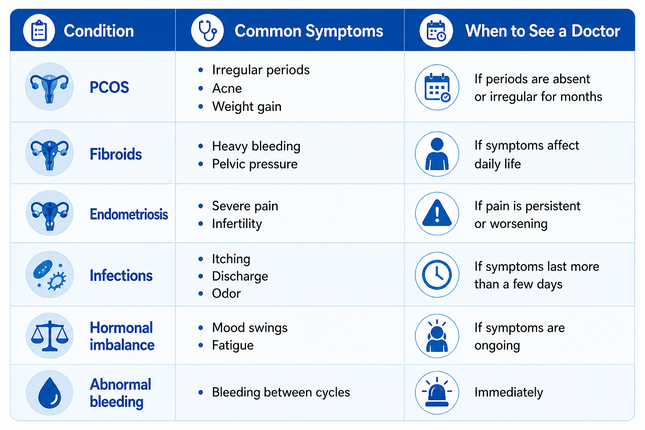
When Should You Visit a Gynecologist?
You should consult a gynecologist if you experience:
- Irregular or missed periods
- Persistent pelvic pain
- Difficulty conceiving
- Unusual discharge or discomfort
- Hormonal symptoms affecting daily life
Regular checkups are recommended even if you feel healthy.
Preventive Care and Regular Checkups
Preventive gynecological care includes:
- Routine pelvic examinations
- Pap smear tests
- Hormonal evaluations
- Ultrasound scans
- Infection screening
Regular visits help detect problems early and maintain reproductive health.
Gynecology Care in Ras Al Khaimah, UAE
If you are looking for gynecology in Ras Al Khaimah UAE, seeking professional and timely care is essential for maintaining women’s health. Clinics such as Platinum Medical Center provide comprehensive gynecological services, including routine checkups, diagnostic testing, and personalized treatment plans.
Early consultation ensures better outcomes and long-term health.
External Health Guidelines
According to the World Health Organization (WHO), regular gynecological care and early diagnosis play a crucial role in preventing reproductive health complications and improving women’s health outcomes.
The UAE Ministry of Health and Prevention also emphasizes routine screenings and awareness for early detection of women’s health conditions.
Conclusion
Common gynecological problems are often manageable when detected early. Ignoring symptoms such as irregular periods, pelvic pain, or unusual discharge can lead to complications that affect overall health and fertility.
Being aware of your body, recognizing warning signs, and seeking timely medical care are essential steps in maintaining long-term health. Regular gynecological checkups provide reassurance, early diagnosis, and effective treatment, helping women lead healthier and more confident lives.
Common problems include PCOS, fibroids, infections, endometriosis, hormonal imbalance, and irregular menstrual cycles.
You should consult a gynecologist if you experience irregular periods, pelvic pain, unusual discharge, or any persistent symptoms.
Yes, most gynecological conditions are treatable, especially when diagnosed early.
Yes, regular checkups help detect problems early and maintain reproductive health.
Yes, conditions like PCOS, endometriosis, and fibroids can impact fertility if left untreated.
Recent Blogs
- IV Vitamin Therapy: What You Should Know Before Your First Session
- Post-Pregnancy Care for New Mothers: A Complete Guide to Recovery After Childbirth
- Childhood Vaccination Schedule in UAE: A Parent’s Complete Guide
- Iron Deficiency in Women: Signs You Shouldn’t Ignore
- Growth & Development Milestones Every Parent Should Know
- Common Gynecological Problems Women Should Not Ignore
- Early Signs Your Body Is Asking for a Health Checkup
- Essential Tests During Pregnancy: A Complete Guide for Expecting Mothers
- Common Health Problems in the UAE & How to Prevent Them
- Women’s Health: Understanding Hormonal Changes

